

“The exploitation of the opponent’s reaction time”
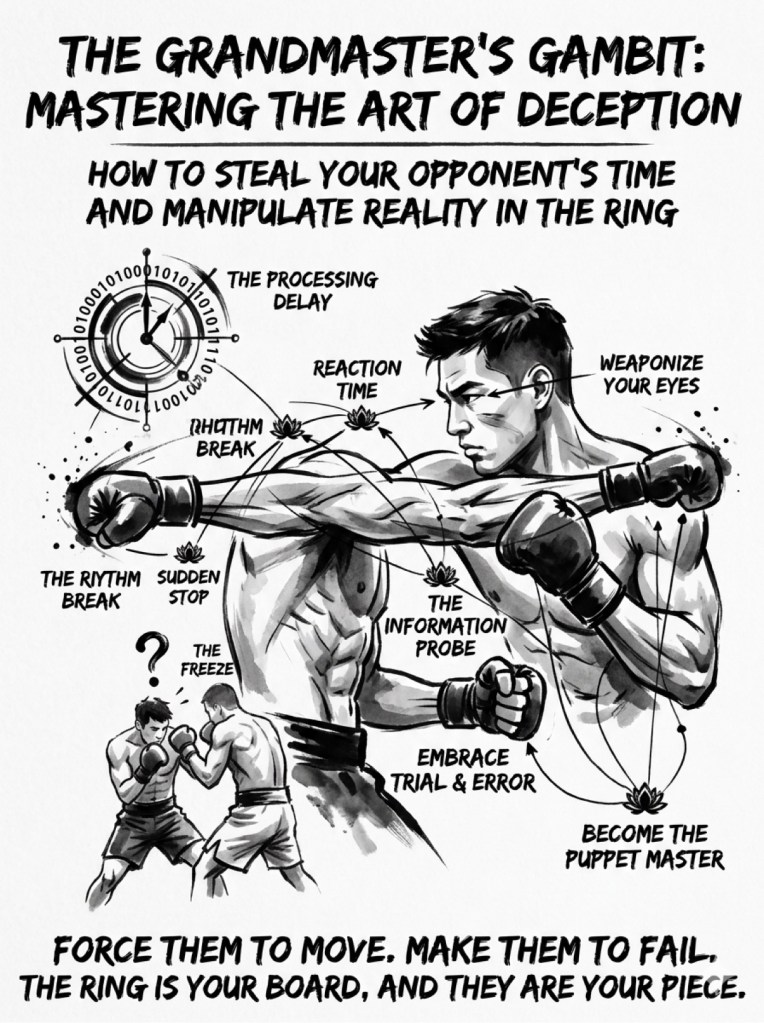
Taking advantage of your opponent’s reaction time involves using selective punch sequences, feints and footwork.
Here we are discussing specific punch combinations to lengthen that opponent’s reaction time.
Now reaction time is the amount of time it takes to respond. In landing punches, reaction time is lengthened when the fighter changes to a different punch technique.
For example, I fighter throws 1, 2 punch combinations to the head. Now if the fighter throws the same combination to the head, the opponent’s reaction time will be quicker. But if the fighter changes the combination 1,2 but goes 1 head and 2 to the body, then the opponents reaction time will be lengthen.
By changing up the punch combinations and targets, a fighter can make it more difficult for their opponent to anticipate their movements and react quickly. This can create confusion and hesitation in their opponent.
Another example, if a fighter repeatedly throws the same punch or combination to the head, their opponent may start to anticipate that punch or combination and be prepared to defend against it. But, if a fighter changes the combination by throwing a punch to the body or using a different technique, it can catch their opponent off guard and make it harder for them to react quickly.
By using selective punch sequences, feints, and footwork, a fighter can manipulate their opponent’s reaction time and create openings for effective punches. With practice, repetition and sparring, this skill set can set you apart from other fighters!
*Note: Once you have lengthened the opponent’s reaction, in that split second window of time if his hands are out of defensive position, he MUST face you unguarded.

