

Concept Overview:
“Catch and Shoot” is a straightforward yet highly effective counterpunching technique that leverages the opponent’s own jab against them. When your opponent throws a single jab, instead of reacting defensively or trying to block passively, you proactively intercept it—catching their punch with a parry—and then immediately capitalize by firing your own jab. This quick retaliatory move not only scores points but also frustrates your opponent by disrupting their rhythm and forcing them to think twice before throwing jabs freely.
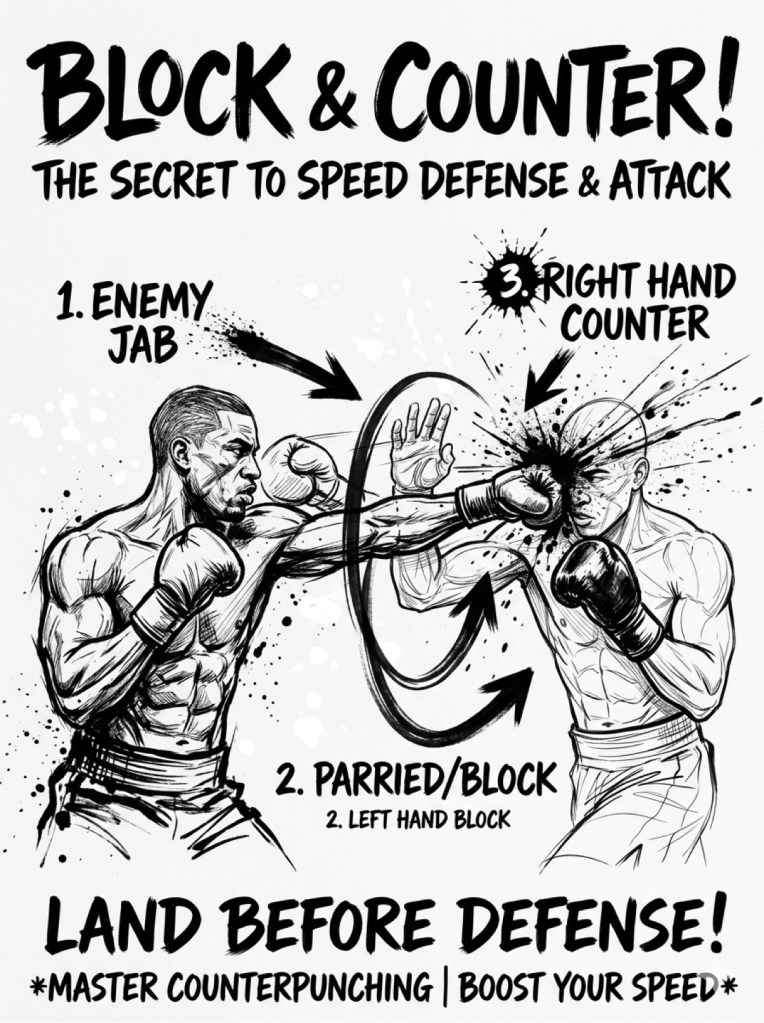
How It Works
Step-by-step Breakdown (assuming an orthodox stance):
Opponent Throws a Single Jab:
Your opponent initiates with a standard jab, aiming to establish distance or set up combinations.
Parry the Jab with Your Right Hand:
Using your right hand, subtly deflect or parry the incoming jab to the side, controlling its trajectory without overcommitting or dropping your guard.
Immediately Counter with Your Own Jab:
Without hesitation, shoot your own jab straight back—aiming to land on your opponent before they can recover or throw their next punch. The key is the rapid transition from parry to punch, exploiting the opening created by their single jab.
Why It’s Effective
Disrupts Opponent’s Timing:**
By intercepting their jab, you prevent them from establishing rhythm or distance control, making them hesitant or more predictable.
Scores Points Quickly:**
The counter jab lands fast and often catches the opponent off guard, especially if timed well.
Creates Frustration and Uncertainty:**
Repeated successful catch-and-shoot counters can make your opponent wary of throwing jabs, opening up other opportunities.
Maintains Offensive Pressure:**
It keeps you active and aggressive rather than purely defensive, forcing your opponent to adapt.
Tips for Effective Execution
Timing is Crucial:**
Anticipate the jab rather than just react to it. Watch your opponent’s shoulder and hand movement for cues.
Keep Your Guard Up:**
While parrying, maintain a tight guard to defend against potential counters or follow-up shots.
Stay Relaxed:**
A tense posture slows your reaction; stay loose and fluid for quick parries and punches.
Practice Speed and Precision:**
Speed is essential—your parry and counter should be seamless, almost simultaneous.
Vary Your Responses:**
Don’t become predictable—sometimes parry and shoot, other times slip or block, to keep your opponent guessing.
Additional Variations and Strategies
Catch and Counter Hook:**
Instead of a jab, catch a jab or straight punch with a parry and immediately counter with a hook or uppercut.
Catch and Move:**
After catching the punch, instead of immediately shooting your jab, pivot or step to a different angle to create new openings.
Feint and Counter:**
Use a faint jab to lure your opponent into throwing their punch, then catch and counter when they commit.
Common Mistakes to Avoid
Overcommitting:**
Trying to parry too hard or too late can leave you open to counters. Focus on controlled, precise movements.
Predictability:**
If you always respond the same way, your opponent will exploit it. Mix in different counters and defensive moves.
Poor Timing:**
Reacting too early or too late diminishes the effectiveness of catch and shoot. Practice timing with drills and sparring.
Drills to Develop Catch and Shoot
Partner Jab Reaction Drill:
A partner throws slow, controlled jabs. Your goal is to practice parrying with your right hand and immediately countering with your own jab. Focus on speed, accuracy, and timing.
Shadowboxing with Focus on Countering:
Visualize an opponent throwing jabs, and practice the catch-and-shoot motion smoothly. Use mirror feedback to refine technique.
Focus Mitt Drills:
A trainer holds focus mitts and throws jabs. Practice catching and shooting back quickly, emphasizing quick transitions and precision.
Controlled Sparring:
In light sparring, intentionally focus on intercepting jabs with catch and shoot techniques, gradually increasing speed and intensity.
Summary
The “Catch and Shoot” is an elegant, efficient counterattack that turns your opponent’s jab into an opportunity for scoring and frustration. When executed with proper timing, speed, and confidence, it can be a game-changer in both amateur and professional boxing.
“Catch and Shoot” Training Drill Sequence
Phase 1: Warm-up & Fundamentals (10 minutes)
Jump Rope (3-5 min):**
Improves footwork, rhythm, and overall conditioning.
Head Movement & Parry Practice (5 min):**
Stand relaxed, practice slipping, bobbing, and parrying in response to slow, controlled punches.
Focus on controlling your parry with your rear hand, maintaining balance and guard.
Use a mirror or record yourself to refine technique.
Phase 2: Partner Jab Reaction & Parry Drill (15 minutes)
Goals: Develop reaction speed, timing, and precision.
Setup:**
Partner throws slow, controlled jabs at your head or chest.
Drill:**
Parry & Counter:
Parry the jab with your right hand, deflecting it to the side.
Immediately shoot your own jab back at your partner before they recover.
Focus:
Aim for accuracy and speed.
Start slowly, then gradually increase the speed as you gain confidence.
Variation:
Switch between jabs to head and body.
Incorporate slips or small pivots after parrying to add complexity.
Phase 3: Focus Mitt Reaction & Timing Drills (15 minutes)
Goals: Improve reaction time, fluidity, and punch precision.
Setup:**
Coach holds focus mitts or pads at head level.
Drill:**
Random Jabs:
Coach throws random, quick jabs.
Your task: parry with your right hand and immediately counter with a jab or cross.
Focus on Transition:
Work on seamless movement from parry to punch, minimizing hesitation.
Vary the Follow-up:
Use different punches—hooks, uppercuts, or body shots—to keep it unpredictable.
Phase 4: Shadowboxing & Visualization (10 minutes)
Goals: Internalize the movement, improve muscle memory.
Shadowboxing:**
Visualize an opponent throwing jabs at you.
Practice parrying and countering with your own jabs or hooks.
Focus on speed, timing, and smooth transitions.
Use a mirror or record yourself for feedback.
Phase 5: Controlled Sparring & Live Application (20 minutes)
Goals: Apply the “Catch and Shoot” in realistic scenarios.
Light Sparring:**
Use focused, controlled exchanges.
Opponent throws jabs; your goal is to parry and counter immediately.
Emphasize timing over power to develop flow and confidence.
Scenario Drills:**
Set specific situations, e.g., “opponent throws a jab, you parry and counter with a hook.”
Practice adjustments and variety in responses.
Phase 6: Review & Cool-down (10 minutes)
Shadowboxing:**
Light, relaxed movement focusing on fluid catch-and-shoot sequences.
Video Review:**
Record your sparring or drills.
Analyze reaction speed, accuracy, and timing.
Identify areas for improvement.
Progression Tips
Start slow and focus on precision and smoothness.
Gradually increase speed as your confidence and timing improve.
Incorporate fakes and feints to make your catch-and-shoot more unpredictable.
Mix different follow-up punches to keep your opponent guessing.

